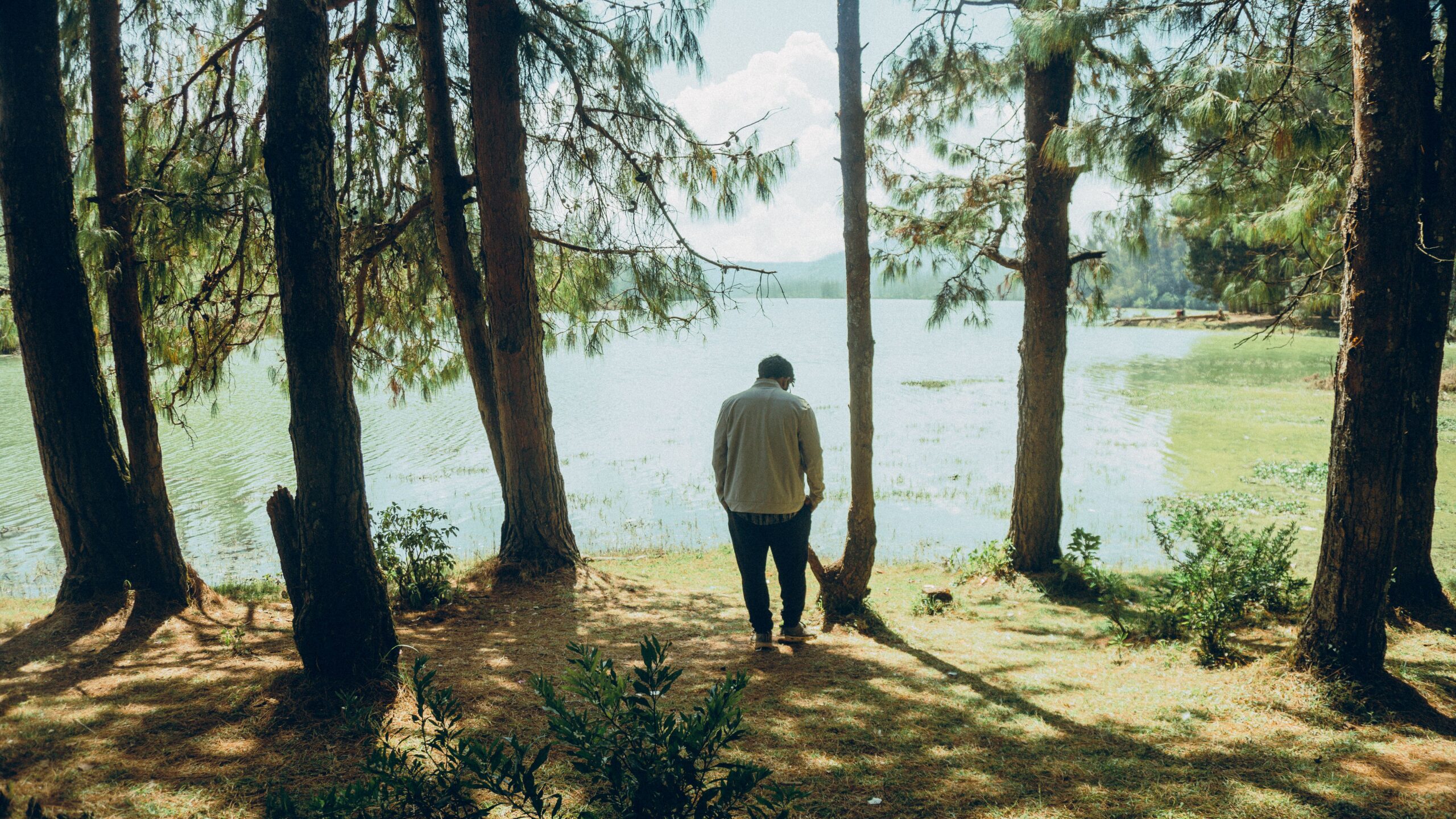
Sometimes I confuse being “introverted” with my fear of being engulfed by other people.
One cue that it’s not really my introversion (a legitimate and real thing for me!), but rather my fear of engulfment that is coming up, is when I notice myself being “too nice.”
I find myself saying yes to things when I really mean no, saying that I am OK when I am really not, focusing on what other people need and managing my reactions accordingly, instead of honoring my own needs.
Those are the (exhausting) times that I tell myself that I just need more alone time: that I am just introverted.
But, this is not always the deepest truth.
With some people, expressing my own feelings, needs or perspective is experienced by others as injurious, as a sign of attack or betrayal. Or as an invitation to fix or help by subtly layering their own perspectives over mine, so that I no longer know where we each begin and end.
Invoking my need for “alone time” can be a way for me to defend my boundaries, my sense of identity, a way to protect myself from being engulfed by the needs and perspectives of certain people.
It can be a strategy for asserting who I am, without arousing suspicion in those who are wanting things from me. As Cheryl Strayed writes, “Alone had always felt like an actual place to me, as if it weren’t a state of being, but rather a room where I could retreat to be who I really was.”
When I am feeling relationally under-resourced, I like to hide in that room she describes.
While this strategy affords me some space and ease, it costs my sense of integrity, wholeness and connection with others. Sadly, it normalizes isolation when I am actually longing to be seen, heard and accepted in safe ways that feel nourishing to me.
Instead of only thinking of myself through the label of “introverted,” I’ve learned to pay close attention to how I am feeling right after someone leaves my company:
- Am I feeling any heaviness or relief to be away from them now, or energized and inspired by our interactions?
- If I am feeling heaviness or relief to be away from them, there may be truths of my own that I am not allowing myself to express in these relationships. What are they? What am I afraid to say? What am I being “too nice” about?
- What am I predicting will happen if I show up more clearly in this moment?
- Is this a relationship in which I want to risk showing up with more transparency and courage, or not?
3 Small Suggestions:
- Take the time to honor your perspective and story. We’ve all had experiences in which well-intended people rush in to show us how we’ve misperceived something, and re-interpret reality for us in an attempt to make us feel differently. Don’t do that to yourself: it will increase self-doubt. Let yourself know your own story before you rush to change it.
- Harvest your needs: In each story there is a layer of needs met and unmet. Wishes realized and unrealized. Longings acknowledged and unacknowledged. Put your attention there. What is your heart deeply longing for more of?
- Honor Choice: We don’t have to be direct with everyone. Sometimes it’s wiser to gently step aside and out of interactions with some people, especially those who are deeply absorbed in their own defenses.
Be more deeply aware of yourself, connect with what is really driving your “introversion” and choose alone time consciously and strategically.